Why Burrel Avenue Feels Like Two Different Streets
October 1, 2026
October 1, 2026
Walk west on Burrel Avenue in Visalia and the street changes personality twice before you reach Mooney Boulevard. Near the 1500 and 1600 blocks, the houses are craftsman bungalows and English Tudor cottages built in the late 1930s, the kind of homes with original tile fireplace surrounds and barrel ceilings that show up in local restoration circles. Head further west, past the 2600 block, and the same street turns into the working end of Tulare County government, home to the office that prosecutes the county's criminal cases and the chamber where five elected supervisors set policy for a county of more than 471,000 people. One street, one name on the sign, two completely different reasons to be standing on it.
That split is not a coincidence of city planning. It is the reason Burrel Avenue reads as a single address on paper but functions as two neighborhoods depending on which end you are standing at.
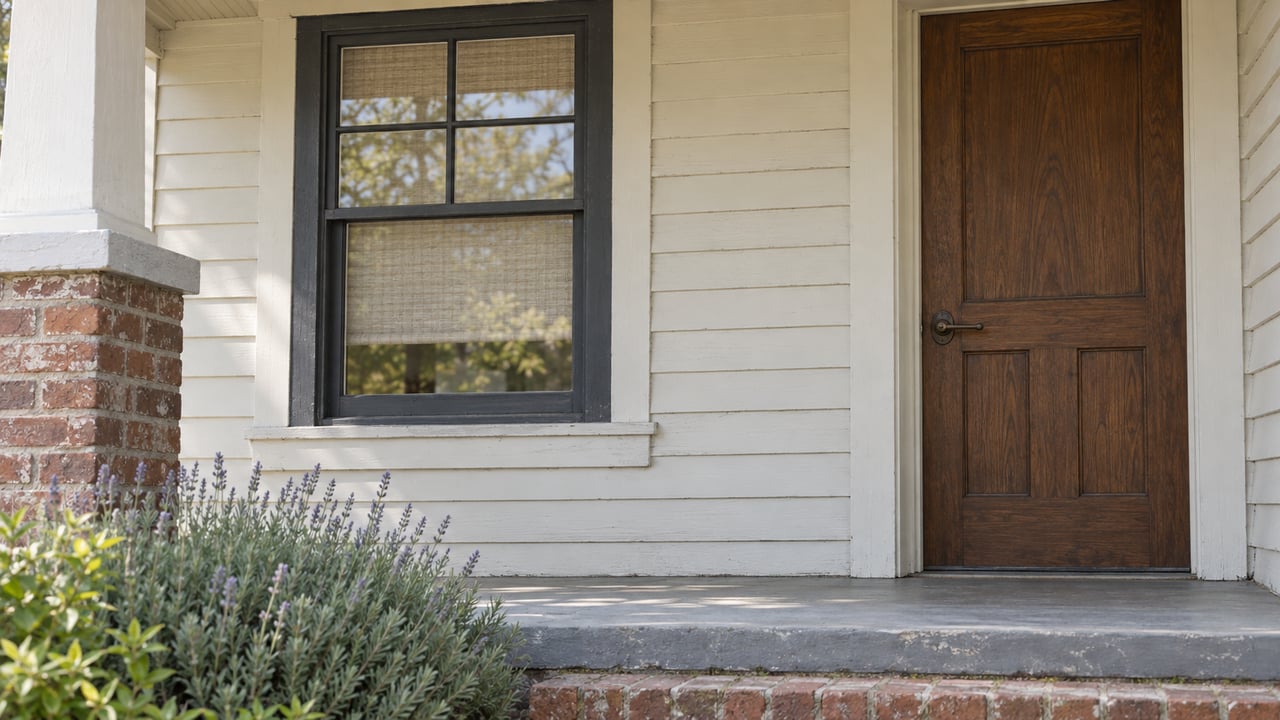
Property records for the 1500 and 1600 blocks of West Burrel Avenue put a cluster of homes at exactly the same construction moment: 1500 W. Burrel built in 1936, 1501 W. Burrel in 1939, 1506 W. Burrel in 1938. These are not scattered older homes mixed into a newer subdivision. They are a tight, single-decade build-out, and the details that survive in them track together too: original wood flooring, craftsman tile work around fireplaces, virgin mahogany trim, barrel-vaulted ceilings. One listing for a home near the Dollner Street corner specifically noted its location blocks from both the Visalia Country Club and Rawhide Stadium, placing this stretch of Burrel solidly inside Visalia's older, established core rather than out at the city's edge.
The city has already drawn a line around part of this territory. A 2014 historic preservation planning map filed with the City of Visalia names Burrel Avenue among the boundary streets of a mapped historic overlay district covering roughly 160 acres, alongside Giddings Street, Center Avenue, and Mineral King Avenue. Being named on a boundary map does not mean every house on the block carries individual protections, but it does mean the city has formally recognized this pocket of Visalia as historically significant enough to track, which lines up with what the construction dates already show.
Keep walking west and the residential character gives way to something else entirely. Burrel Plaza, at 2637 W. Burrel Avenue, houses the Tulare County District Attorney's office. A few blocks further, the county's Board of Supervisors Chambers sit at 2800 W. Burrel Avenue, where the five-member board meets weekly on Tuesdays at 9 a.m. to set policy for county departments and land use across Tulare County's unincorporated areas.
This is not a strip mall next to some houses. It is a functioning piece of county government infrastructure, sharing an address format with homes built when Franklin Roosevelt was in his first term.
| Stretch of Burrel Ave | What anchors it | Worth knowing |
|---|---|---|
| 1500-1600 block | Craftsman and Tudor homes built 1936-1939 | Named on the city's 2014 historic overlay boundary map; blocks from the Country Club and Rawhide Stadium |
| 2600-2800 block | Burrel Plaza (District Attorney's office) and the Board of Supervisors Chambers | Supervisors meet Tuesdays at 9 a.m.; open to the public |
It would be easy to assume the county courthouse itself is somewhere along this same government stretch of Burrel Avenue. It isn't. The Tulare County Superior Court operates out of the County Civic Center at 221 S. Mooney Boulevard, a different street entirely, with public lobby hours running Monday through Thursday from 8 a.m. to 4 p.m. That four-day public schedule is its own small detail worth knowing if you live anywhere near this corridor: unlike a typical five-day office week, the heaviest institutional traffic tied to county business tends to compress into Monday through Thursday, with Fridays running quieter across the civic buildings even though Burrel Plaza and the Supervisors Chambers keep their own separate hours nearby.
So the neighborhood carries the name of a government street without actually hosting the courthouse. What it hosts instead is the administrative and prosecutorial side of the county, the offices that do the paperwork and set the policy rather than the room where cases get heard.
None of this means Burrel Avenue runs purely on government time. The same proximity to the Visalia Country Club and Rawhide Stadium that shows up in property listings for the historic block also means the eastern end of the street answers to a different schedule entirely, one set by tee times and home game nights rather than county business hours. A street that empties out west of the 2600 block by late afternoon on a Thursday can still see its eastern blocks fill back in for an evening at the ballpark or a round of golf, two entirely separate rhythms sharing one name on the map.
That is the actual shape of this place. Not a single identity that outsiders can sum up in one line, but two overlapping patterns of use stitched together by a street sign, one dictated by construction dates from the late 1930s and the other by a county government campus that never had much reason to coordinate with the houses six blocks away.
If your address happens to fall on the historic end of Burrel Avenue and you're weighing what to preserve versus what to update in a craftsman or Tudor home from that era, that's exactly the kind of decision Ruben Olguin has spent 25 years working through with owners of Visalia's older housing stock. A conversation about what's original, what's worth keeping, and what a renovation actually returns in value costs nothing to start.
Work hand-in-hand with an experienced real estate agent who provides guidance, market expertise, and personalized support to help you buy, sell, or invest with confidence.
1220 W MAIN ST VISALIA CA 93291