The Hour Before Visalia Mall Opens Is Beverly Glen's Real Morning Routine
September 17, 2026
September 17, 2026
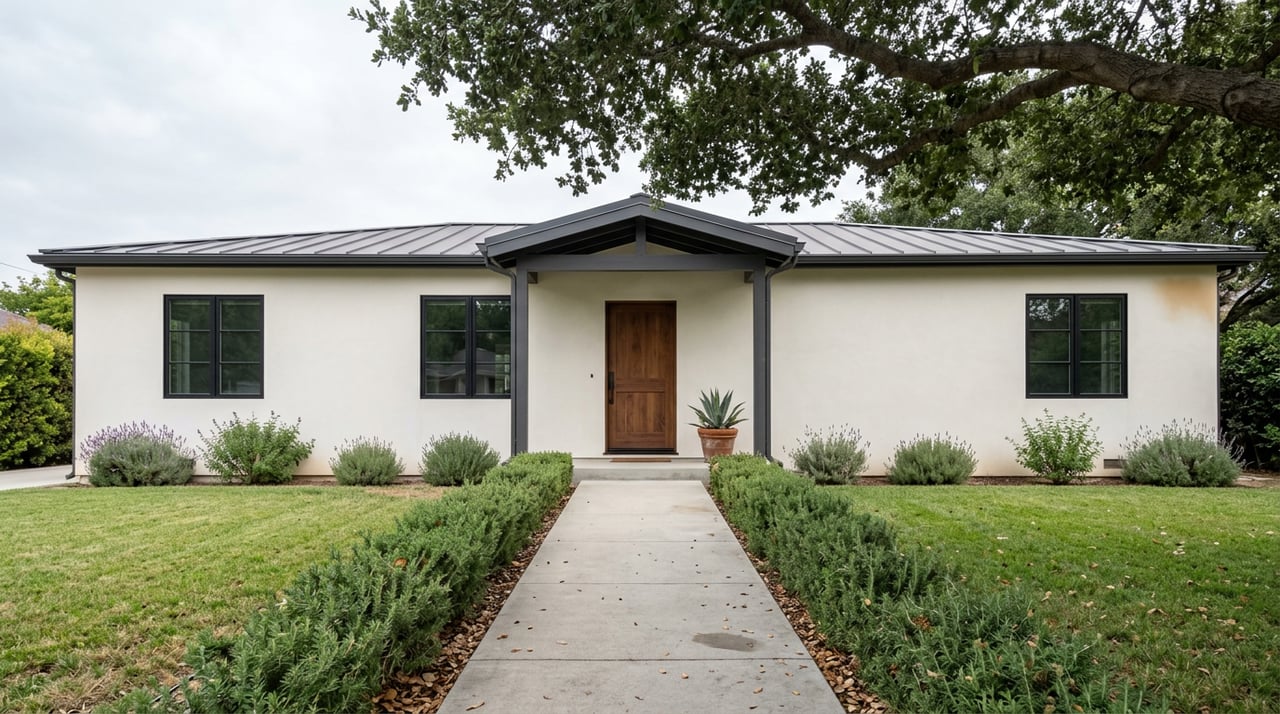
Walk out the door on Beverly Drive most mornings before eight and you will pass more dogs than cars. The streets under Beverly Glen's oak canopy carry that kind of quiet, the kind that comes from a grid built decades ago and never widened. But the neighborhood's actual walking route does not stop at its own borders. It crosses Mooney Boulevard, into a building that will not technically be open to shoppers for another hour.
That building is Visalia Mall, and the gap between when its doors unlock and when its registers do is the detail that explains more about how Beverly Glen actually functions than any listing description ever will.
Beverly Glen sits inside a tight, specific frame: Highway 198, known locally as the Sequoia Freeway, forms its northern edge, Giddings Street closes it off to the east, Tulare Avenue runs along the south, and Mooney Boulevard marks the western boundary. Inside that rectangle is a pocket of mature oak trees old enough to give the neighborhood its own microclimate of shade, a rarity in a city where most residential canopy was planted well after the houses went up.
Mooney Boulevard is also where Visalia Mall sits, at 2031 South Mooney Boulevard, just outside Beverly Glen's western line. On paper the mall opens to shoppers at 11 a.m. every day of the week. In practice, the doors unlock a full hour earlier, at 10 a.m., specifically for mall walkers. No purchase required, no stores lit up yet, just climate-controlled hallways and a loop that some Visalia residents have used for exercise for years.
For a neighborhood defined by its own walkability, that hour matters more than it sounds like it should. Beverly Glen's own streets are shaded and flat, genuinely pleasant for a morning circuit, but they are also short. The neighborhood's full footprint, bounded on four sides by a freeway, two arterial streets and a boulevard, does not offer much distance before you are retracing your steps. The mall's early hour effectively extends the loop. It gives residents a second lap, indoors, air conditioned, with none of the retail noise that shows up after 11.
This is not a marketing amenity. It is a scheduling quirk that a specific set of neighbors have built into their week, and it only works because Beverly Glen happens to sit close enough to walk there.
Head the opposite direction, east toward Giddings, and the neighborhood's relationship with its restaurant strip gets more complicated. The blocks between Mooney and Giddings carry posted parking permits, put in place because diners eating at nearby restaurants had been leaving their cars on residential streets rather than in a restaurant lot. The signs are not subtle. If you park there without a resident permit and you are eating out that night, you are likely to come back to a ticket.
Tahoe Joe's Famous Steakhouse, on the Mooney corridor, is one of the restaurants residents mention most often in this context, both as a regular dinner stop and as the reason the permit zone exists in the first place. It is a small piece of friction that only someone who actually lives on these blocks would think to mention, and it says something true about Beverly Glen's position: close enough to a commercial corridor to walk to dinner, established enough as a residential block that the city had to formalize who gets to park on it.
Dutch Bros Coffee, also along the Mooney frontage, plays a smaller but similar role. It is the kind of stop that shows up on lists of neighborhood establishments not because it is unique to Beverly Glen but because it is genuinely part of the walking loop, close enough to fold into a morning routine without a car.
None of this is dramatic. It is the ordinary math of a neighborhood that sits one block from a commercial boulevard rather than several miles from one, and it shapes daily decisions in ways that a satellite view of the neighborhood would never show.
Beverly Glen also runs on a seasonal rhythm that does not appear on any city events calendar, because it is organized block by block rather than by the city. Residents who have lived there for years describe a recurring set of traditions that repeat every year with little formal coordination:
None of these require a permit or a city cosponsor. They persist because the same families have been on these blocks long enough to keep them going, which tracks with what longtime residents say about the neighborhood: houses built more than fifty years ago on generous lots, still occupied, still being worked on rather than torn down.
None of these details, the mall's early hour, the permit signs, the informal calendar, would mean much filed separately. Together they describe a neighborhood whose real boundaries are not the four streets that define it on paper but the walking radius its residents have built for themselves, one that happens to spill a block into the mall parking lot before the stores open and a block toward Giddings for dinner.
That is a different kind of neighborhood identity than the one usually described in a real estate listing, which tends to stop at square footage and lot size. Beverly Glen's oak canopy and central location are real assets, but the thing that actually organizes a resident's week is smaller and more specific than either: an hour of empty mall hallway, a strip of restaurants close enough to walk to, and a set of traditions nobody had to formalize because the same neighbors have kept them alive for years.
If you already live under that canopy, none of this is news. It is just Tuesday. But it is worth naming, because it is the kind of detail that outlasts whatever is listed for sale on the block that week. Neighborhoods like Beverly Glen do not get their character from a single feature. They get it from small, repeated choices, an early walk, a coffee stop, a dinner reservation you plan around the permit signs, that add up to something a spreadsheet will never capture.
Ruben Olguin has spent more than two decades working in Tulare County neighborhoods like this one, including years chairing Visalia's historic preservation board, and that work starts with understanding a place at exactly this level of detail. If you are curious what a home in Beverly Glen or a similar Visalia neighborhood is actually worth in today's market, or you are weighing whether a renovation makes sense for a house that has been in the family for decades, Ruben Olguin is glad to talk through it. Schedule a free consultation whenever you are ready.
Work hand-in-hand with an experienced real estate agent who provides guidance, market expertise, and personalized support to help you buy, sell, or invest with confidence.
1220 W MAIN ST VISALIA CA 93291