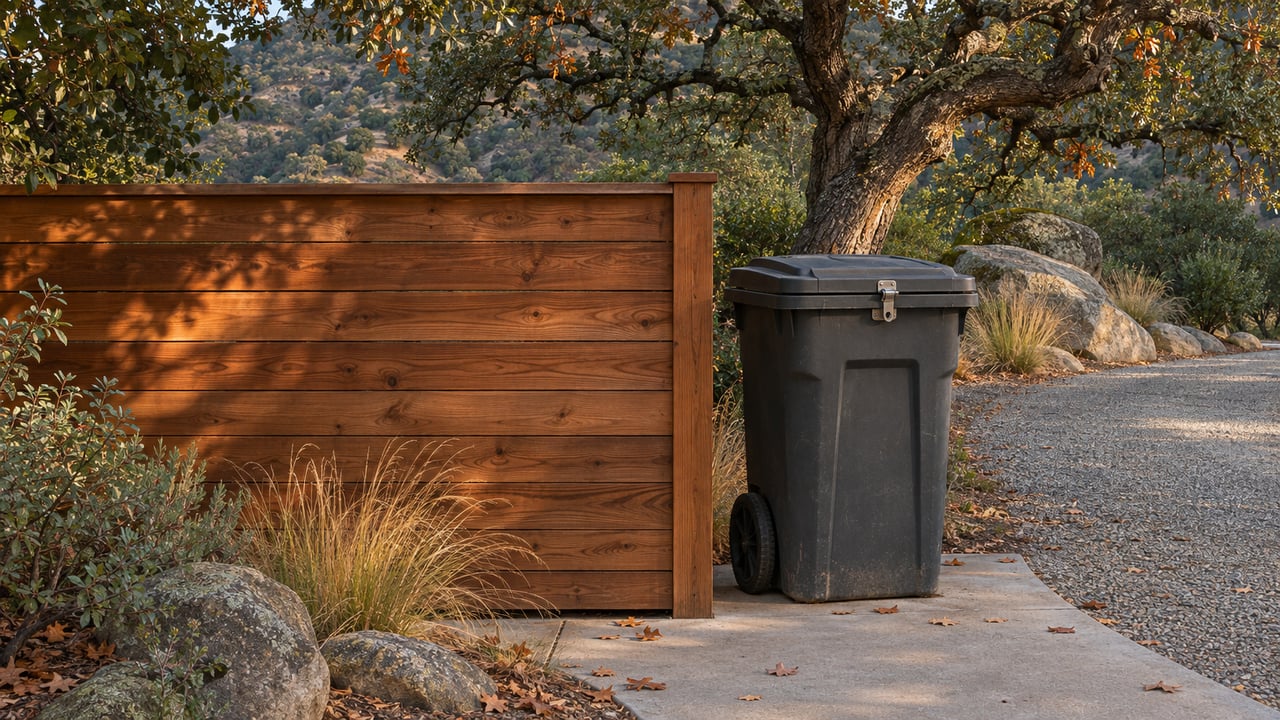
In Three Rivers, the Bear Ordinance Comes Down to a Latch and a Lid
November 12, 2026
November 12, 2026
This is the first fall that Three Rivers garbage service has run under Tulare County's bear-resistant cart rule. Supervisors adopted the ordinance 3–2 on November 18, 2025, and it took effect April 1, 2026. Under the rule, Mid-Valley Disposal provides bear-resistant carts to every residential customer who subscribes to garbage service in the designated Three Rivers Bear Management Area. Before the ordinance, households handled bear-proofing their own way, and some had built enclosures. Now the main tool is a single cart chosen and supplied by the hauler, and whether it works depends on how it is handled on collection day.
That timing matters this month. The National Park Service at Sequoia & Kings Canyon explains that autumn acorns are critical to bears putting on weight before winter, and that bears may stay active when winter is warm and acorns are plentiful. The rule was written for the curb, and fall is when bears are most motivated to test it.
The Sun-Gazette's account of the final vote lays out the terms. Supervisors Larry Micari, Pete Vander Poel and Dennis Townsend voted yes. Supervisors Amy Shuklian and Eddie Valero voted no. The item was pulled from the consent calendar so it could be considered separately. The Visalia Times-Delta also covered the 3–2 split as the cans became mandatory.
| Item | As adopted November 18, 2025 |
|---|---|
| Effective date | April 1, 2026 |
| Who supplies the cart | Mid-Valley Disposal, to residential garbage subscribers in the Bear Management Area |
| Residential cost | An added $12 per month for a 96-gallon cart |
| Commercial cost | A 10% surcharge |
| Cart model | Toter, certified by the Interagency Grizzly Bear Committee on Nov. 5, 2024 and by the Wildlife Management Institute on June 13, 2025, per the Sun-Gazette |
| Hauler's rollout estimate at adoption | 90 to 120 days to procure and implement |
Both sides of the cost argument centered on that $12. Shuklian called it "$12 in perpetuity." In her view, if Mid-Valley Disposal did not need to modify its trucks for the new carts, the charge should cover the carts themselves and possibly the cost of collecting the old ones, and nothing beyond that. Vander Poel replied that the hauler carries the cost of buying and maintaining the carts. He also noted that the certified carts come with a three-year warranty, compared with the 10-year warranty on the old carts, so the hauler will be buying replacements as carts are destroyed. He said that justified the ongoing surcharge.
Residents who spoke during public comment did the math on the other side. Elizabeth Holiday said the ordinance would raise residential cart service rates by 30 to 40 percent. Linda Utch estimated that over 10 years the surcharge alone could bring the hauler more than $1 million, separate from the 5 percent franchise fee the county collects. Utch also objected to the ordinance's effect on bear-resistant enclosures, including those that households had spent thousands of dollars installing.
Before the ordinance was introduced, county public information officer Jennifer Faukes held a meeting with members of the Bear Smart group, a California Department of Fish and Wildlife biologist and Mid-Valley Disposal representatives. According to Faukes, when the group was asked which cans it would endorse, it named the Toter and the Kodiak. Daniel Boland, a retired National Park Service ecologist who worked on wildlife management for nearly 25 years, said he was encouraged that the issue was moving forward. He also said the ordinance was written without input from the Three Rivers community or the park biologists.
Once the trade was made, the question became how the carts performed in actual use. The most detailed local account comes from Bear Smart Three Rivers, a volunteer group that has followed the issue from the start.
The group reported problems before the cart change was complete. A January 9, 2026 post described bears toppling bins and spreading trash along lower Mineral King Road and near Totem. One bin was knocked into the road, where it created a driving hazard.
On March 24, 2026, just ahead of the effective date, the group published a notice about the first weeks with the new carts, which it said Mid Valley had recently distributed. Its description of the lids:
"They are not opening automatically when tipped into the truck, so lids are left open, allowing wind and ravens to distribute the trash."
The same post said that many people could not physically unlatch the new carts. It also said that wildlife was still getting into recycling and green-waste carts, and that metal bins were being toppled along the highway, up Mineral King Road and in the North Fork area. The same notice described the hauler's response: Mid Valley Disposal had staff traveling ahead of the truck to open lids and was working with the cart manufacturer on a fix, with no completion date set as of March.
Most of the problems in that account happen at the point where the cart is handled: a lid that stays open after the truck tips it, a latch that some people cannot work, and a recycling cart holding something a bear can smell. Several of those handling steps fall to the household, which is why the collection-day routine matters as much as the cart model.
This is the part residents can act on. It combines Mid-Valley Disposal's own service rules with Bear Smart Three Rivers' March guidance.
The Sequoia & Kings Canyon food-storage guidance across the park boundary follows the same idea. It treats garbage and recyclables as scented items and directs trash into bear-resistant bins and dumpsters.
The holiday calendar also affects this routine. Mid-Valley Disposal lists Thanksgiving among the holidays it closes for, and this year Thanksgiving falls on Thursday, November 26. A household that hosts a holiday meal in acorn season may have its fullest cart of the year sitting on a closed day.
The ordinance also created a reporting path, and Bear Smart's March notice lists the routes. Service problems go to Mid-Valley Disposal through its online issue form. Concerns about the program itself, such as carts some people cannot unlatch, can also go to the Tulare County Solid Waste contact page. The group collects incident reports and bear sightings at [email protected] and is recruiting volunteers to track them neighborhood by neighborhood.
Those reports become the record the next time the ordinance comes before the Board of Supervisors. Valero, who represents Three Rivers as the District 4 supervisor, said at adoption that the ordinance did not reflect "a comprehensive or community-supported solution." If the board revisits the rule, dated incident reports from Mineral King Road, North Fork and the Highway 198 corridor are the evidence it would have to work from.
This post is general information about a county ordinance and a hauler's service terms, not legal or financial advice. Owners and rental managers should confirm their own billing and obligations directly with Mid-Valley Disposal and Tulare County.
A trash rule also affects property value. For a foothill home or a rental on the Kaweah, buyers will want to know how the garbage setup works, including where the cart is kept, how it is secured and what happened to an existing enclosure. If you are weighing how a bear-country setup affects a Three Rivers property you own or plan to buy, Ruben Olguin can walk through it with you. Schedule a free consultation.



Work hand-in-hand with an experienced real estate agent who provides guidance, market expertise, and personalized support to help you buy, sell, or invest with confidence.

1220 W MAIN ST VISALIA CA 93291